In markets where the grid drops for two, four or eight hours a day, the battery is not an optional extra — it decides whether a shop keeps trading and whether a home keeps its fridge running. This guide shows how to size a LiFePO4 battery bank from your actual loads, and which system voltage to choose for the capacity you need.
Step 1 — Write down the loads you want to back up
Start with what you cannot do without, not with everything you own. Multiply the running watts of each item by the hours it runs during an outage and add the results. Forget the arithmetic shortcut that says “a 5 kVA inverter needs a 5 kWh battery” — it is the loads that define the battery, not the inverter label.
| Load | Running watts | Hours during outage | Wh needed |
|---|---|---|---|
| Refrigerator / chest freezer | 150 W average | 8 | 1,200 |
| LED lighting, 10 points | 60 W | 5 | 300 |
| Wi-Fi router and ONT | 15 W | 6 | 90 |
| Laptop and phones | 80 W | 4 | 320 |
| Ceiling fan | 70 W | 6 | 420 |
| Water pump | 750 W | 0.5 | 375 |
| Total | 2,705 Wh |
Inductive loads such as pumps and compressors also draw a start-up surge, often three times their running current. That surge is a current problem for the inverter and the BMS, not an energy problem for the battery — but if the inverter trips when the pump starts, it is the surge rating you need to raise.
Step 2 — Decide how many hours of autonomy you need
Autonomy is how long the bank must carry the load with no recharge at all. Two numbers matter in most load-shedding markets: the length of the outage, and the recharge window you realistically get between outages.
| Outage pattern | Autonomy to design for | Battery energy for the 2,705 Wh load above |
|---|---|---|
| 2 – 4 hours, twice a day, reliable recharge between | 4 hours | 2.7 – 3.5 kWh |
| 4 – 8 hours once a day | 10 hours | 6.8 – 7.5 kWh |
| Two or more days without reliable grid | 24 – 48 hours | 16 – 33 kWh |
Step 3 — Convert to battery capacity
Three factors sit between the watt-hours you calculated and the amp-hours printed on the battery label:
- Inverter efficiency — a good pure sine wave inverter loses about 10 %, so divide by 0.9.
- Depth of discharge — LiFePO4 tolerates 100 % DoD, though designing around 80 % gives noticeably more cycle life.
- Temperature derating — capacity falls in cold conditions; a pack running at 0 °C can deliver roughly 10 – 20 % less than one at 25 °C.
Battery energy (Wh) = daily watt-hours ÷ 0.9 ÷ 0.8
Worked example — a small shop
A shop needs 4,500 Wh per outage. The calculation gives 4,500 ÷ 0.9 ÷ 0.8 = 6,250 Wh. A 51.2 V (48 V nominal) pack at 200 Ah stores 10,240 Wh, which covers the outage with headroom for a cloudy day on solar and for a second evening peak. That is the configuration of our 51.2V 200Ah LiFePO4 powerwall battery.
Worked example — a family home
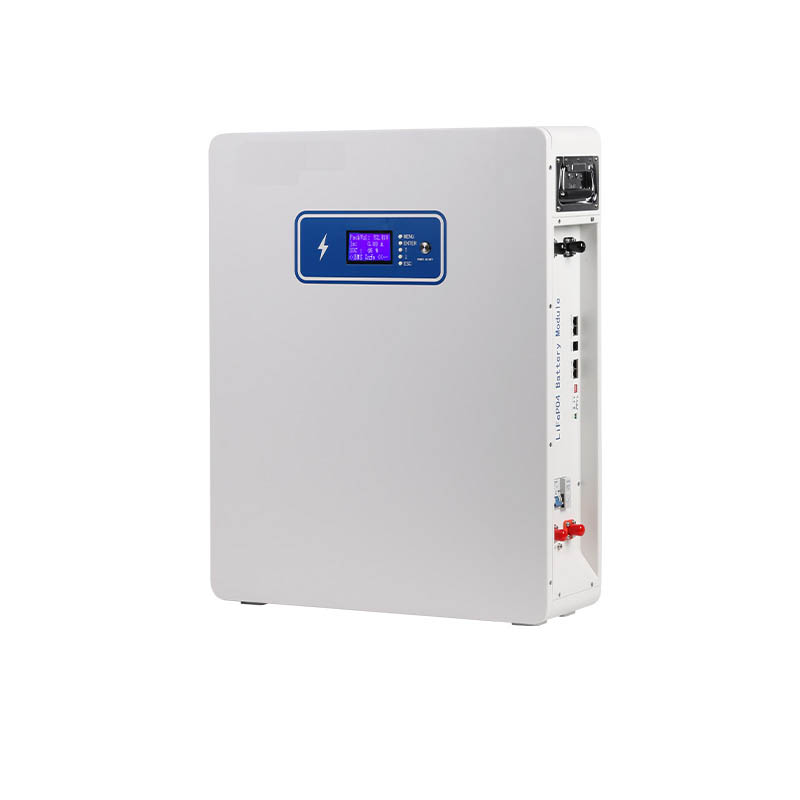
A home needs 3,000 Wh per outage. The calculation gives 3,000 ÷ 0.9 ÷ 0.8 = 4,167 Wh. A single 51.2V 100Ah wall-mounted battery stores 5,120 Wh — enough for the evening peak, wall-mounted in the garage or utility room, with no venting required.
Step 4 — Choose the system voltage
Current, not energy, decides this. The same 5 kW load draws 417 A at 12 V, 208 A at 24 V and 104 A at 48 V. Higher voltage means thinner cables, smaller breakers and less heat.
| System | Practical capacity range | Typical use |
|---|---|---|
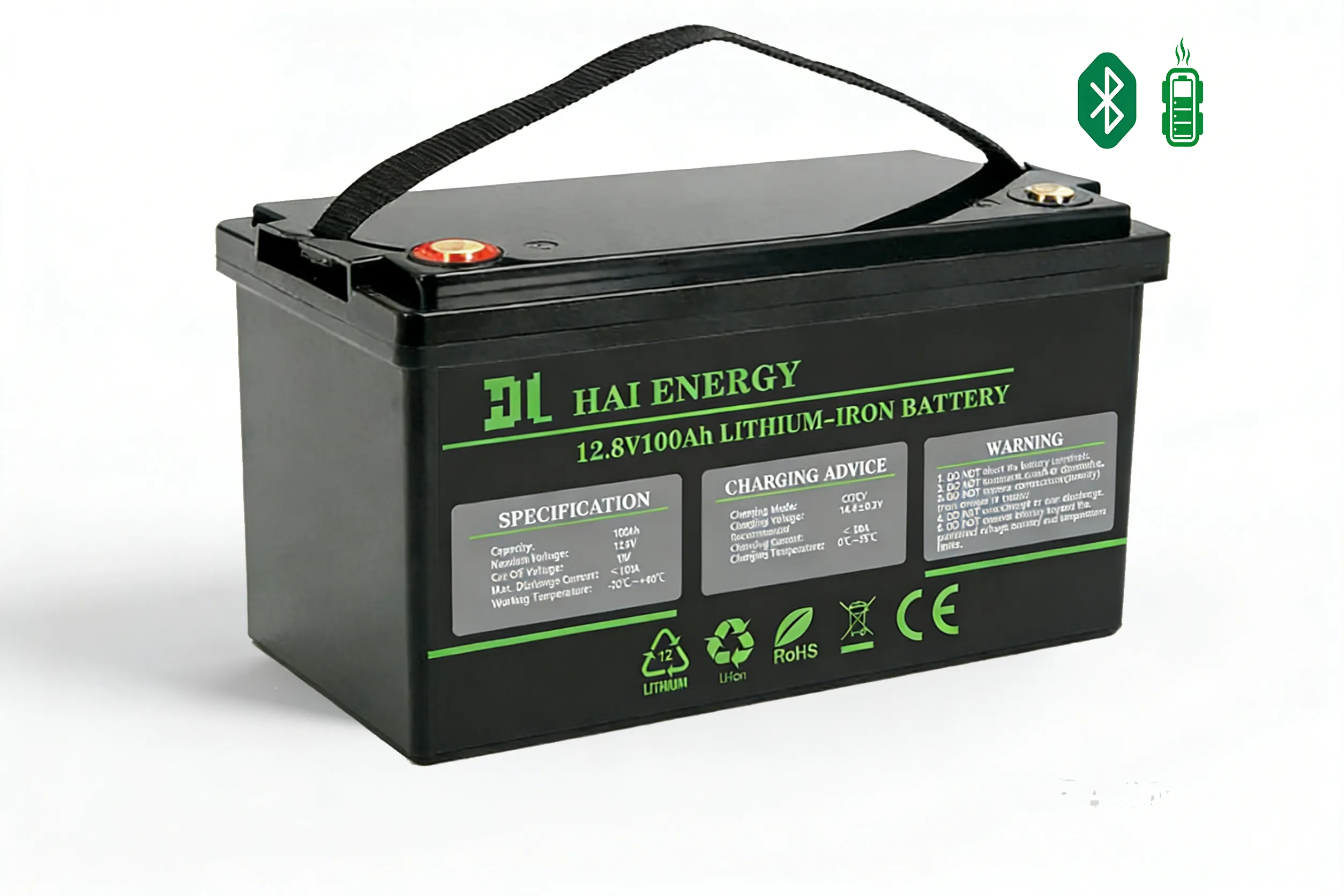
| 12 V | Up to about 3 kWh | Small back-up, lights, router, phone charging, DC fridges |
| 24 V | 3 – 8 kWh | Offices, small shops, 2 – 3 kW inverters |
| 48 V | 5 – 30 kWh and above | Homes, clinics, retail, hybrid solar systems |
Above roughly 3 kW of inverter capacity, 48 V is the standard choice. Browse our 48V LiFePO4 energy storage batteries for the rack-mount and cabinet formats most installers in this segment specify.
Why LiFePO4 suits load shedding better than lead-acid
- Deep discharge without damage. A lead-acid bank designed for daily 50 % discharges is effectively twice the size, weight and cost of the LiFePO4 bank that does the same job.
- Fast recharge. When the grid returns for only three hours, a LiFePO4 pack accepts 0.5 C and refills; a lead-acid bank is still in its absorption stage.
- No fumes, no water, no equalising. A wall-mounted pack can be installed inside a shop or apartment corridor.
- Cycle life. Daily deep cycling is exactly the duty that destroys lead-acid in 18 months and that LiFePO4 is designed for.
Recharging between outages
Two things limit how quickly the bank refills: the charge current the BMS accepts, and the power the grid or the solar array can supply.
- Grid charging: match the charger to the inverter and keep the charge current within the pack’s rating. A 100 Ah 48 V pack typically accepts 50 A, which refills an empty pack in about two hours.
- Solar charging: size the array from the daily energy and the peak-sun-hours of your location, and remember that a partly discharged battery at the end of an outage day leaves room for the next day’s harvest.
- Communication: where the inverter supports CAN or RS485, the battery can report state of charge and current limits, which prevents both nuisance shutdowns and overcharging.
What to specify in a purchase order
- Nominal voltage, capacity, and continuous versus peak discharge current.
- Communication protocol and inverter compatibility — this is the single most common integration problem.
- Ingress protection and enclosure format: rack, cabinet, wall-mount or DIN-size.
- Low-temperature charge protection if the site drops below 0 °C.
- Warranty terms, spares availability and the documentation package for the destination market.
Frequently asked questions
How many kWh do I need for 8 hours of load shedding?
Multiply the average load in kilowatts by eight. A 0.5 kW average load needs 4 kWh, which after inverter and depth-of-discharge allowances becomes about 5.5 kWh of installed capacity.
Can I start with one battery and add more later?
Yes, if the additional packs are the same model, voltage and batch, and are balanced before being connected in parallel. Mixing a new pack with a well-used one causes circulating current and shortens the life of both.
Is LiFePO4 safe to install inside a house?
LiFePO4 has a thermal runaway temperature of about 270 °C and is very difficult to ignite, which is why it is the chemistry of choice for indoor wall-mounted storage. Lead-acid, by contrast, releases hydrogen while charging and needs ventilation.
Will a 5 kVA inverter work with a 48V 100Ah battery?
Yes for most household loads. A 48 V 100 Ah pack stores 5.12 kWh and will run a 5 kVA inverter at moderate load, but heavy continuous draw will empty it in about an hour. Size the battery from the loads, not from the inverter rating.
Do I need a special charger?
Your inverter-charger must have a lithium or programmable charging profile with 56.0 – 57.6 V bulk and about 54.4 V float for a 48 V pack. Never use an equalisation cycle on a lithium bank.
Related products and resources
- Wall-mounted home energy storage batteries — 51.2 V packs from 100 Ah
- 48V 100Ah LiFePO4 rack mount battery — cabinet-friendly for commercial backup
- 48V 100Ah LiFePO4 batteries for solar energy storage — further reading
- LiFePO4 vs lithium-ion — which chemistry to specify
- 12V 100Ah LiFePO4 battery buying guide — Further reading
Tell us your load list and the length of your typical outage, and we will size the bank for you. Request a wholesale quotation.